
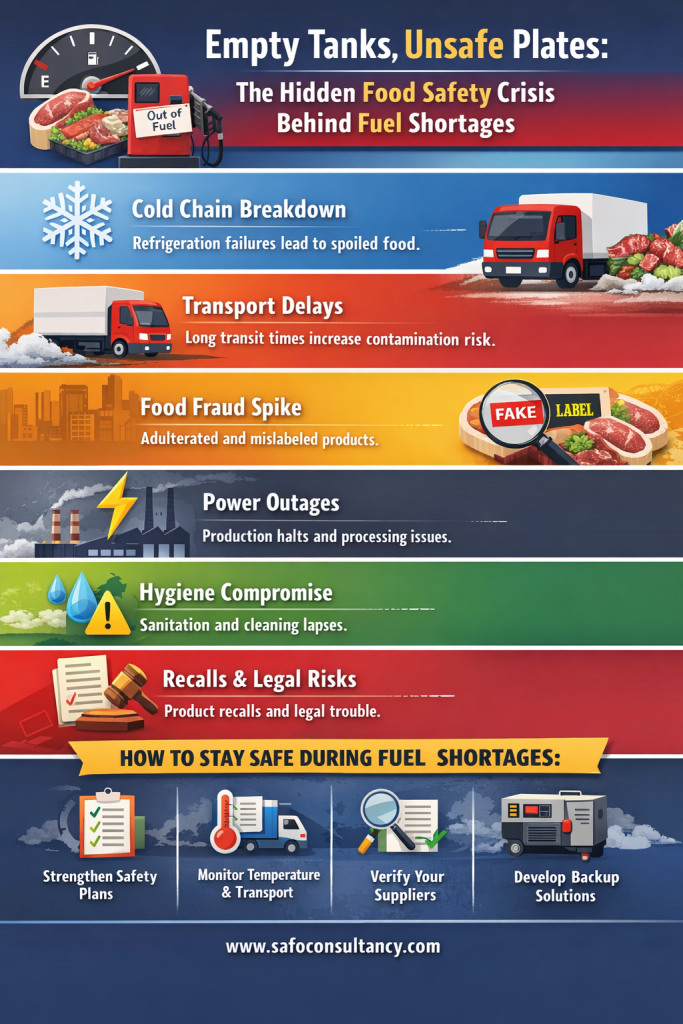
🚨 Introduction: When Fuel Runs Dry, Food Safety Follows
Fuel shortages are often seen as logistical or economic challenges. Long queues, disrupted transport, and operational slowdowns dominate the headlines.
But beneath the surface lies a far more dangerous and often overlooked consequence—the breakdown of food safety systems.
When fuel supply becomes unstable, every link in the food chain—from farm to fork—is at risk.
❄️ 1. Cold Chain Breakdown: The Silent Spoiler
One of the most immediate impacts of fuel shortages is the disruption of the cold chain.
Refrigerated trucks, cold rooms, and storage facilities rely heavily on fuel or electricity. When fuel is limited:
-
Deliveries are delayed
-
Refrigeration systems fail or operate intermittently
-
Perishable food stays longer in unsafe temperature zones
This creates the perfect conditions for microbial growth, increasing the risk of foodborne illnesses.
👉 Even a few hours outside safe temperature ranges can make products unsafe for consumption.
🚚 2. Transportation Delays = Increased Risk Exposure
Fuel shortages directly impact logistics:
-
Raw materials arrive late
-
Finished goods sit longer in transit
-
Distribution schedules collapse
Extended transportation times expose food to:
-
Temperature abuse
-
Cross-contamination
-
Poor handling conditions
For export-oriented businesses, this can lead to rejected shipments, recalls, and brand damage.
⚠️ 3. Rise of Food Fraud and Unsafe Substitutions
During crises, businesses may face pressure to maintain supply at any cost. This often leads to:
-
Sourcing from unverified suppliers
-
Using substandard or adulterated ingredients
-
Mislabeling or extending shelf life illegally
Fuel shortages can indirectly fuel food fraud.
👉 When supply chains are stressed, traceability becomes weak—creating opportunities for unethical practices.
⚡ 4. Power Cuts and Production Interruptions
Fuel shortages often trigger energy crises, leading to:
-
Frequent power outages
-
Reduced production capacity
-
Interrupted processing cycles
This affects:
-
Cooking and processing temperatures
-
Cleaning and sanitation schedules
-
Equipment reliability
Inconsistent processing conditions can result in unsafe products reaching the market.
🧼 5. Compromised Hygiene and GMP Practices
When operations are disrupted:
-
Cleaning schedules are delayed
-
Water supply systems may be affected
-
Staff fatigue increases human error
Even well-established Good Manufacturing Practices (GMP) begin to weaken under pressure.
📉 6. Increased Risk of Food Recalls and Legal Issues
The combined impact of:
-
Cold chain failures
-
Delayed transport
-
Poor sourcing
-
Weak hygiene
…significantly raises the risk of:
-
Food safety incidents
-
Product recalls
-
Legal penalties
-
Loss of consumer trust
🛡️ How Food Businesses Can Stay Safe During Fuel Shortages
Despite the challenges, proactive strategies can protect your business:
✔️ Strengthen Your Food Safety Management System
Ensure your system (ISO 22000, HACCP, BRCGS) includes crisis and contingency planning.
✔️ Monitor Critical Control Points (CCPs) Closely
Increase frequency of:
-
Temperature checks
-
Transport monitoring
-
Storage inspections
✔️ Develop Backup Plans
-
Alternative fuel suppliers
-
Backup generators
-
Secondary logistics partners
✔️ Enhance Supplier Verification
Avoid shortcuts—verify all new or emergency suppliers thoroughly.
✔️ Train Your Team
Crisis situations require awareness and quick decision-making.
🌍 Final Thoughts: A Crisis Beyond Fuel
Fuel shortages are not just an operational inconvenience—they are a food safety risk multiplier.
Businesses that recognize this early and act strategically will not only survive the crisis but build stronger, more resilient systems.
Because in food safety, one truth remains constant:
When systems fail, consumers pay the price.
📞 Call to Action
If your business is struggling to maintain food safety standards during operational disruptions, now is the time to act.
At SAFO Consultancy Pvt Ltd, we help organizations build resilient food safety systems that withstand crises.
📧 Email: info@safoconsultancy.com
📞 Hotline: +94 77 3611640