
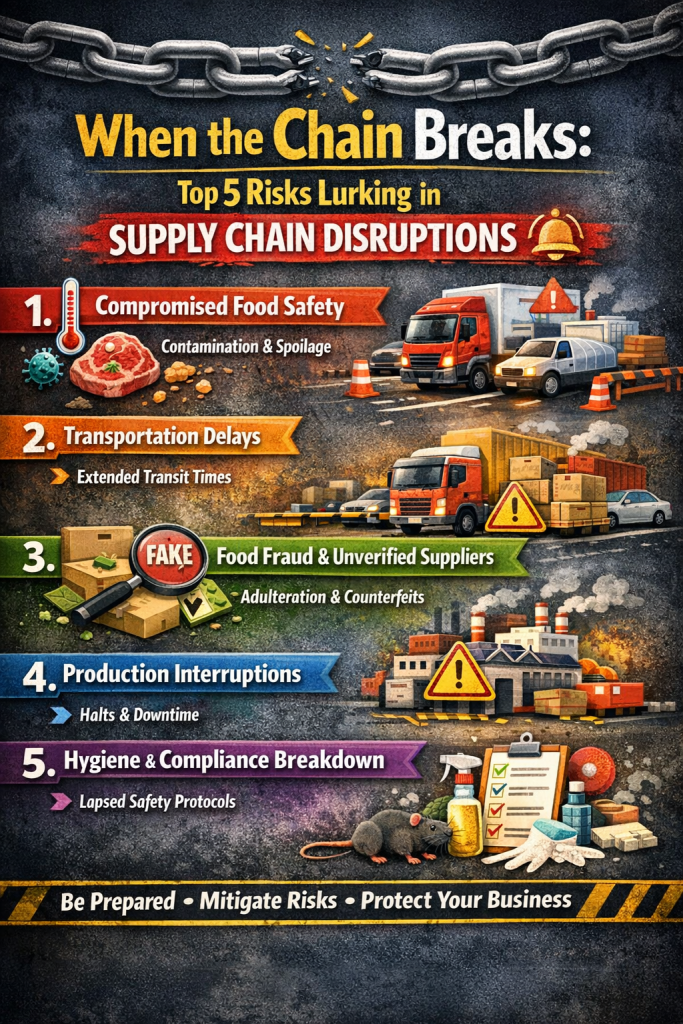
🚨 Introduction: Disruptions That Go Beyond Delays
In today’s unpredictable world, supply chain disruptions are no longer rare—they are expected. From fuel shortages and global crises to logistics failures, businesses are constantly navigating uncertainty.
But the real danger isn’t just delayed deliveries—it’s the hidden risks that quietly compromise food safety, product integrity, and brand trust.
Understanding these risks is the first step toward building a resilient and compliant food business.
⚠️ 1. Compromised Food Safety and Quality
When supply chains are disrupted:
-
Raw materials may arrive late or in poor condition
-
Temperature control may be lost
-
Storage conditions may become inconsistent
This increases the risk of:
-
Microbial contamination
-
Spoilage
-
Unsafe products reaching consumers
👉 Even minor disruptions can escalate into major food safety incidents.
🚚 2. Transportation Delays and Extended Exposure
Disruptions often lead to:
-
Longer transit times
-
Unplanned route changes
-
Poor handling conditions
As a result:
-
Perishable goods remain in unsafe conditions longer
-
Risk of cross-contamination increases
-
Shelf life is reduced
For exporters, this can mean rejected shipments and financial losses.
🔍 3. Increased Risk of Food Fraud and Unverified Suppliers
When regular suppliers fail to deliver, businesses may:
-
Turn to new or unverified vendors
-
Accept lower-quality substitutes
-
Compromise on supplier approval processes
This opens the door to:
-
Adulteration
-
Mislabeling
-
Counterfeit ingredients
👉 Supply chain stress is one of the biggest triggers for food fraud.
⚡ 4. Operational and Production Interruptions
Supply disruptions can halt production due to:
-
Lack of raw materials
-
Equipment downtime
-
Energy shortages
This leads to:
-
Inconsistent processing conditions
-
Incomplete production cycles
-
Increased waste and rework
Such inconsistencies directly affect product safety and compliance.
🧼 5. Breakdown of Hygiene and Compliance Systems
Under pressure, businesses may unintentionally relax:
-
Cleaning schedules
-
Pest control measures
-
Monitoring and documentation
Staff may also experience:
-
Fatigue
-
Stress
-
Reduced attention to detail
This weakens Good Manufacturing Practices (GMP) and increases the likelihood of non-compliance.
📉 The Business Impact: More Than Just Losses
The consequences of these risks include:
-
Product recalls
-
Regulatory penalties
-
Loss of certifications (ISO 22000, BRCGS, HACCP)
-
Damaged brand reputation
-
Loss of customer trust
In today’s competitive market, trust once lost is hard to regain.
🛡️ How to Mitigate Risks During Supply Chain Disruptions
To stay resilient, businesses must act proactively:
✔️ Strengthen Your Food Safety Management System
Incorporate risk-based thinking and contingency planning into your system.
✔️ Approve Backup Suppliers in Advance
Avoid last-minute decisions—pre-qualify alternative suppliers.
✔️ Enhance Monitoring and Traceability
Increase frequency of:
-
Temperature checks
-
Supplier verification
-
Batch tracking
✔️ Train Your Team for Crisis Situations
Prepared teams make better decisions under pressure.
✔️ Invest in Infrastructure
Backup generators, cold storage solutions, and logistics partnerships can make a critical difference.
🌍 Final Thoughts: Resilience is the New Competitive Advantage
Supply chain disruptions are inevitable—but their impact doesn’t have to be.
Businesses that understand and prepare for these risks will not only protect their operations but also strengthen their market position.
Because in the end:
A strong supply chain doesn’t just deliver products—it delivers trust.
📞 Call to Action
If your business is facing challenges due to supply chain disruptions, now is the time to strengthen your systems.
SAFO Consultancy Pvt Ltd supports organizations in building resilient, compliant, and audit-ready food safety systems.
📧 Email: info@safoconsultancy.com
📞 Hotline: +94 77 3611640